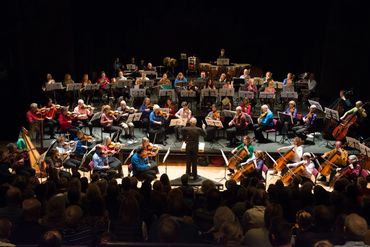
Enjoy the Magic of Classical Music with Warwickshire Symphony Orchestra
Join us for unforgettable performances of timeless masterpieces
17th October 2026 7.30pm
Warwick Hall Warwick

Autumn Concert - Saturday 17th October 7:30pm
Warwick Hall
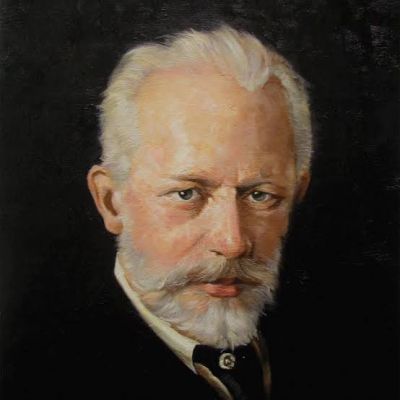
Tchaikovsky
Capriccio Italien
Piano Concerto Number 1
Symphony Number 6 'Pathetique'
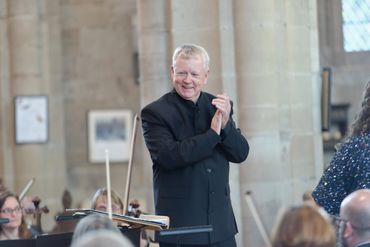
Conductor - Roger Coull
Soloist - James Willshire
Next concerts 22nd November 2026 - Spa Centre
13th March 2027 - All Saints
12th June 2027 - All Saints

Principal Conductor - Roger Coull
Warwickshire Symphony Orchestra 's Principal Conductor is Roger Coull
Roger Coull’s route into conducting has come very much from the eyes and ears of a performer. As a string quartet leader of international standing he has always been used to interpreting music and every aspect of the process of turning a vision into performance.

Piano soloist - James Willshire
Heralded for performances of “spectacular musicianship and technical brilliance” (The Scotsman), “evangelizing urgency” (International Record Review) and “freshness and lucidity” (The Herald Scotland), James Willshire has performed at the BBC Proms, live on BBC Radio 3, and at the Royal Festival Hall, Barbican, Bridgewater Hall, St John’s Smith Square, Purcell Room, Glasgow City Halls, Queens Hall Edinburgh, Perth Concert Hall, St George’s Bristol, Caird Hall and the Fairfield Halls.
James is a committed advocate of contemporary music, giving world premiere performances of works by Ronald Stevenson, John McLeod, Rory Boyle, Nicola LeFanu, Robin Holloway, Errollyn Wallen, Thomas Simaku, Stuart MacRae, Electra Perivolaris, Jay Capperauld, Jia Chai, Lynne Plowman, David Lancaster, Michael Parkin, Ailís Ní Ríain, Rylan Gleave and David Power.
As a recording artist James has been highly acclaimed, with his most recent disc a 2024 recording of the chamber music by Helen Grime with the Hebrides Ensemble. .
James’ engagements in 2026 include a debut recital at Kings Place, and concerts at the St Magnus Festival, Chetham’s School of Music, the Royal Welsh College of Music and Drama, and at the Royal Conservatoire of Scotland. 2027 will include a debut at Wigmore Hall, where James will be performing chamber and solo works with the Hebrides Ensemble.
Tchaikovsky
Capriccio Italien
This fantasy for orchestra is a richly descriptive portrait of Italy, written when the composer spent three months in Rome in 1880. Capriccio Italien opens in sombre mood but high spirits soon kick in and the merrymaking begins. Although it’s not one of Tchaikovsky’s ballet scores, it’s hard to resist moving to the piece’s infectious rhythmic energy. By the end, you and all of Rome are dancing a tarantella in the streets.
Piano Concerto Number 1
What is there to say about one of the most famous ever piano concertos!
The high point of Tchaikovsky’s famous concerto is the melody that comes right after the piano’s introductory chords. The orchestra plays this melody, and the piano accompanies. Listen closely, because (oddly) this wonderful tune never returns! The rest of the first movement is coloured delightfully by Russian folk music. In the second movement, we may notice the contrast between slow and fast musical speeds in alternating sections. The finale is quick and dance-like for the most part. However, the composer emphasises a beautiful lyrical melody, which we hear from time to time, especially near the end.
Symphony Number 6 'Pathetique'
Few symphonies in the standard repertoire have spawned more controversy, mystery, and legend than Tchaikovsky’s Sixth, the Pathétique. Musicians and musicologists recognize it as the pinnacle of the composer’s instrumental craft—nothing less (in one scholar’s words) than “the most truly original symphony to have been composed in the seventy years since Beethoven’s Ninth.” But beyond its innovative formal brilliance and raw emotional intensity, the Sixth became famous immediately after its premiere as a weird harbinger of the composer’s death. Only nine days after Tchaikovsky—who was then an international cultural celebrity at the peak of his career—conducted the first performance in St. Petersburg, he succumbed to what appeared to be cholera. He was only 53. The strange coincidence of these two events led to furious speculation about the relationship between the Sixth Symphony and various aspects of Tchaikovsky’s life.